
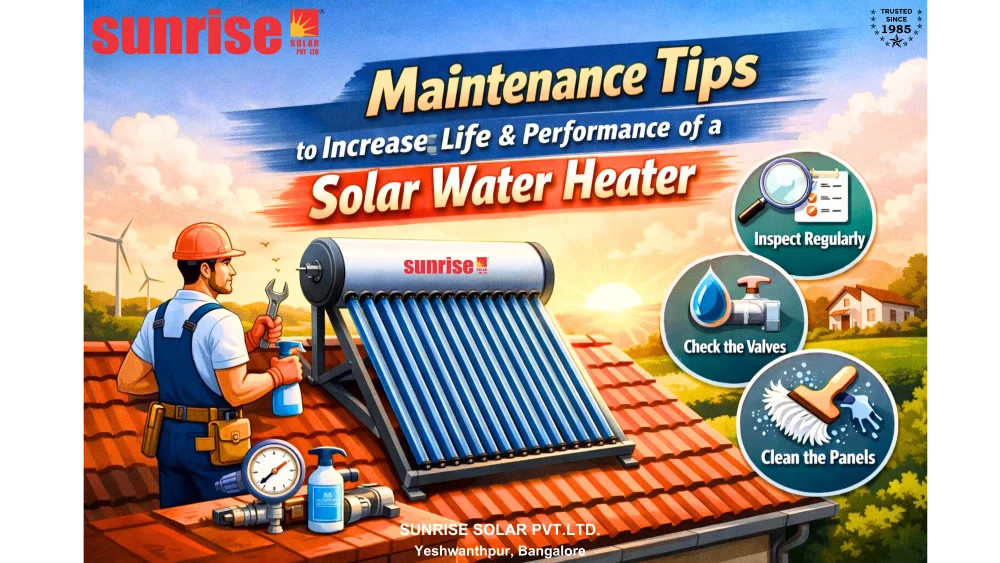
Indian consumers look for a lifetime affair with consumer durables; the psyche of Indian consumers is very strong towards establishing a long and steady relationship with electronic appliances. The same rule is aptly applicable while buying solar water heaters. Regularly maintaining a solar water heater is quite simple and easy, though it may look tough at the outset; this effort can extend its lifespan by 50% to 100%. This simple maintenance effort can extend a 15-year typical lifespan of the appliance to a potentially 30-year period. How solar water can be maintained is the larger question that’s bothering us due to its rugged and difficult position on the terrace. Typically, if one is expecting a good performance, they should plan to clean the solar water heater once in 6 months; the solar collectors have to be cleaned of dust and bird droppings. This will clean the collectors and make them absorb more sunlight, increasing the efficiency by over 10-20%. The cleaning can be done using soap and water and a soft cloth to keep the collectors scratch-free. Regular cleaning of solar water heaters is indeed a good habit for the owners, as this greatly enhances the efficiency of the appliance and also saves money.
Apart from external cleaning, internal cleansing is also required to keep the solar appliance in good shape. Flushing the storage tank removes sediment and mineral buildup; this buildup chokes the water flow and reduces the heating capacity, which might hamper the overall performance of the solar appliance. Rural India is abundant with hard water; many households are affected by the buildup of sediment and minerals in the storage tank. The ideal solar water should be hard water compatible; this reduces the chances of sediment buildup. While flushing the storage is a challenge, it is easily achievable by strictly following the process. To flush your solar water heater tank, one should first turn off the power/pump, close the cold-water inlet and attach a hose to the bottom drain. This process will let it drain until it is completely clear; then, briefly turn the cold water supply back on (or “power flush”) to agitate and flush more sediment. Close the drain and allow water to refill, restore power, and these steps will help prevent the buildup of sediment and minerals. The solar appliance will achieve comprehensive maintenance efficiency with this process.
In hard water areas, installing a water softener and periodically circulating a mild acidic solution (like vinegar) through the collector loop will also help dissolve mineral deposits. This process can also be followed regularly. Therefore, choosing an ideal solar water heater for rural areas is very important. Consumers looking for high-performing solar appliances should research and find out the best solar company, which also happens to be the most trusted one. This effort will pay good incentives in the long run.
There are a few more valuable instructions that need to be followed to achieve higher performance and efficiency from the solar appliance. Replacing the Anode Rod once every 3–5 years is important, and this directly impacts the performance. The anode rod attracts corrosion to itself to protect the tank’s interior from rusting; hence, replacing it when it is more than 50% corroded is a compulsory step that needs to be taken. Solar water heater owners should know the methods to maintain the appliances; the methods might be challenging, but they are definitely manageable.


